Test the whole order path before adopting a restaurant system
A successful checkout is only one checkpoint. Require evidence that the correct order reaches the correct station, changes propagate, and recovery does not create missing or duplicate work.
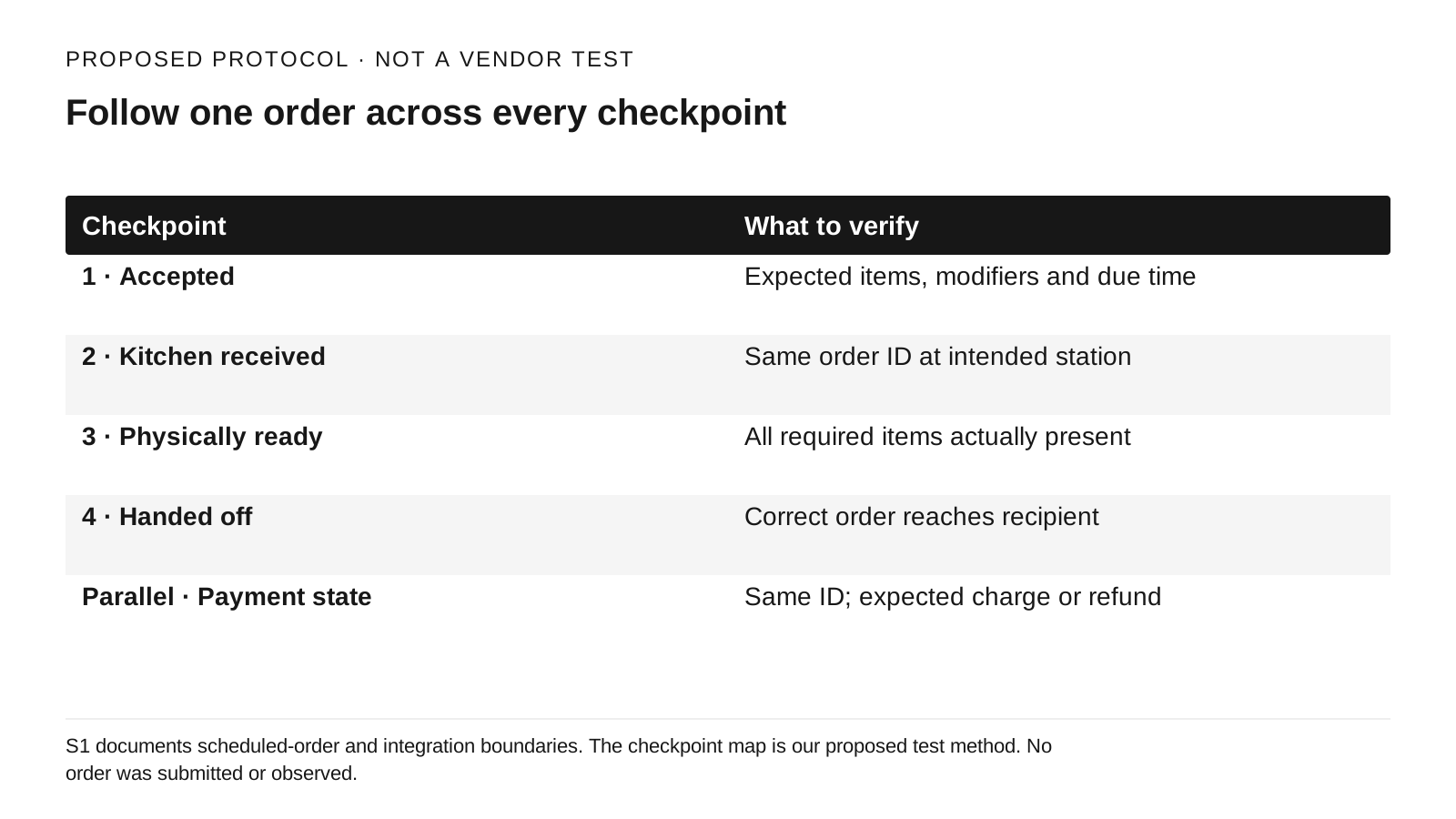
Read the diagram and its basis
proposed protocol
| Checkpoint | What to verify |
|---|---|
| 1 · Accepted | Expected items, modifiers and due time |
| 2 · Kitchen received | Same order ID at intended station |
| 3 · Physically ready | All required items actually present |
| 4 · Handed off | Correct order reaches recipient |
| Parallel · Payment state | Same ID; expected charge or refund |
S1 documents scheduled-order and integration boundaries. The checkpoint map is our proposed test method. No order was submitted or observed.
Original editorial explanatory diagram; not vendor evidence
Source references: S1
A feature list does not establish an order path
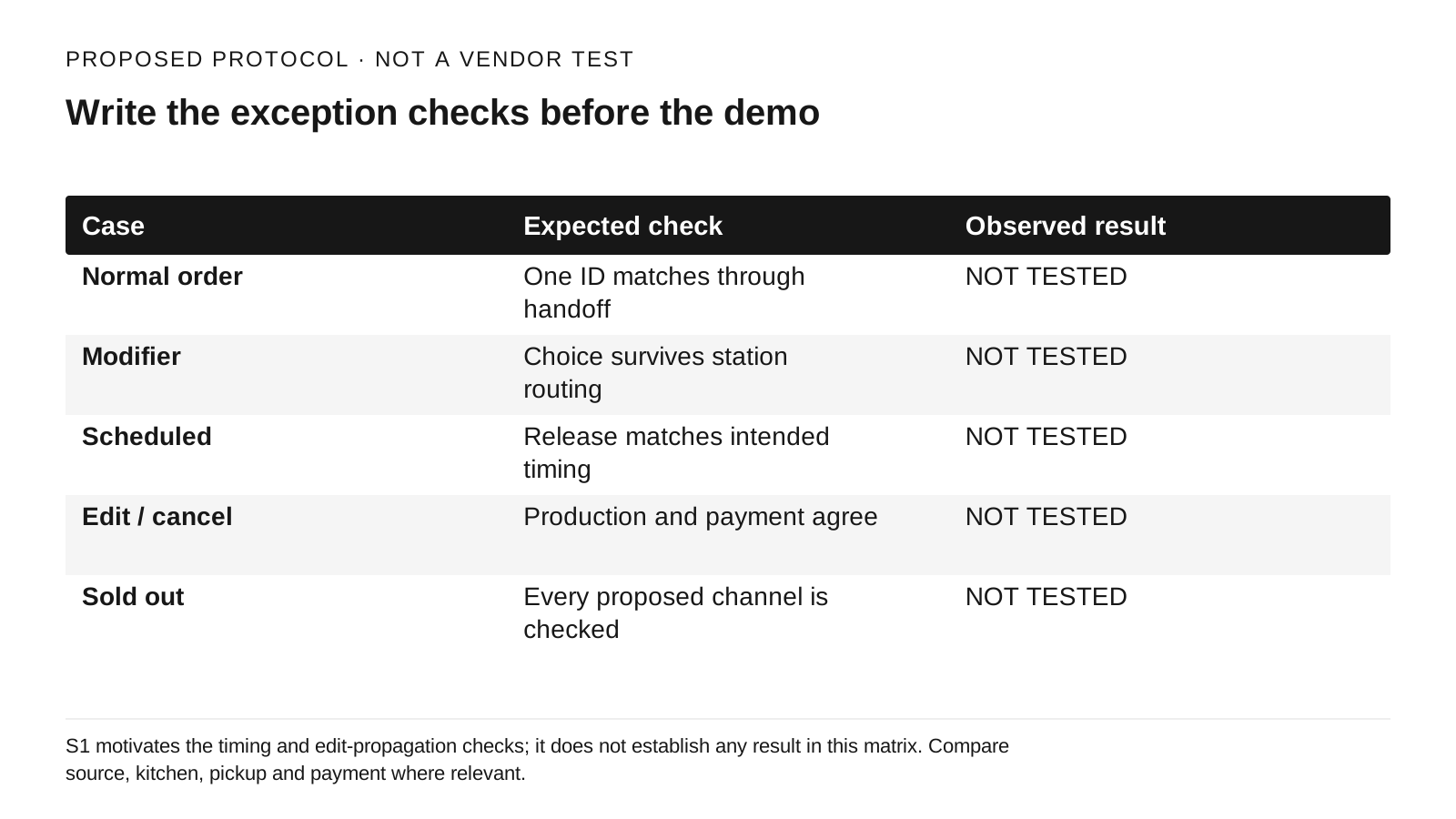
Read the diagram and its basis
proposed protocol
| Case | Expected check | Observed result |
|---|---|---|
| Normal order | One ID matches through handoff | NOT TESTED |
| Modifier | Choice survives station routing | NOT TESTED |
| Scheduled | Release matches intended timing | NOT TESTED |
| Edit / cancel | Production and payment agree | NOT TESTED |
| Sold out | Every proposed channel is checked | NOT TESTED |
S1 motivates the timing and edit-propagation checks; it does not establish any result in this matrix. Compare source, kitchen, pickup and payment where relevant.
Original editorial explanatory diagram; not vendor evidence
Source references: S1
Toast's Orders Hub guide documents a Scheduled-to-Active transition that depends on an Autofire-configured device and the prep-time clock. It also warns that local edits to third-party orders may not be reflected in the originating integration. These are specific documented behaviors, not faults observed by this publication. They explain why an acceptance test must name both the channel and the intended downstream state. [S1]
Start with an ordinary paid pickup order in a demonstration or isolated test environment configured like the proposed purchase. Use a synthetic menu and vendor-supported payment test mode. Write the expected item, size, modifier, quantity, due time, price, payment state, destination station, and pickup identifier before anyone demonstrates it. Record what actually appears at each checkpoint.
Use a case record with the proposed plan, device model, software version, integration, configuration date, operator role, expected result, actual result, and evidence. An observer should be able to reconcile the same order reference across screens. A polished demonstration of a different integration or plan remains evidence about that demonstration, not your proposed setup.
Make exception cases part of the demonstration
After the ordinary order, test a required modifier, a removed ingredient, an item whose components use two stations, and a change after acceptance. Compare the original and amended versions so the kitchen does not unknowingly prepare both. For cancellation, distinguish canceling production from voiding or refunding payment; ask the seller to demonstrate the supported procedure and show the resulting state in every relevant system.
Test a future pickup time and an order close to the channel's configured cutoff. Observe when the order becomes visible, when work is released, and what the guest-facing promise says. Test an unavailable item through each proposed channel. An item disabled at the register might follow a different update path online; do not presume that a successful change in one place establishes synchronization everywhere.
Include the roles that will use the system. A manager demonstration can hide a required permission that a cashier or expediter does not have. Have the seller show how an exception reaches the responsible person and how it is resolved without losing the order reference. Record unknown or plan-dependent behavior instead of treating a verbal assurance as a passing result.
Recovery needs reconciliation, not just a green connection icon
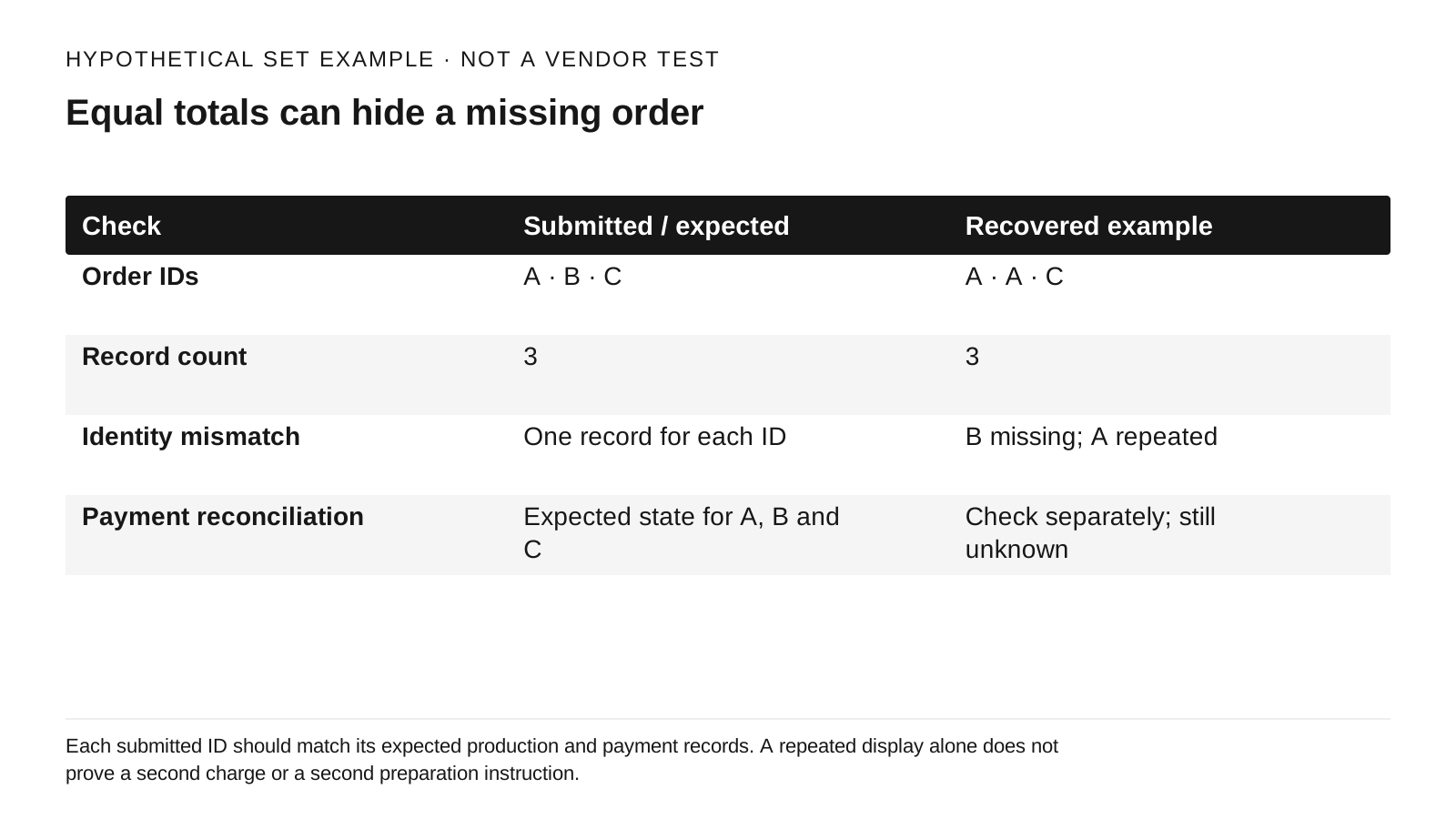
Read the diagram and its basis
hypothetical set example
| Check | Submitted / expected | Recovered example |
|---|---|---|
| Order IDs | A · B · C | A · A · C |
| Record count | 3 | 3 |
| Identity mismatch | One record for each ID | B missing; A repeated |
| Payment reconciliation | Expected state for A, B and C | Check separately; still unknown |
Each submitted ID should match its expected production and payment records. A repeated display alone does not prove a second charge or a second preparation instruction.
Original editorial explanatory diagram; not vendor evidence
Source references: Original hypothetical example
Toast's public FAQ says ready messages resume when Orders Hub reconnects and synchronizes, with the Autofire device also online and firing. That is a documented dependency to verify if this configuration is under consideration; it does not establish the behavior of every channel, outage, or hardware version. [S2]
In an isolated, vendor-supported demonstration, ask for a controlled interruption and reconnection case. Keep a list of synthetic orders accepted before, during, and after it. Compare unique order references and expected items after recovery. Matching totals alone are insufficient: one missing order and one duplicate can leave the same count. Separate a second display of an existing order from a second production instruction or second charge.
Define who detects an incomplete order, who contacts the customer if needed, and where the authoritative payment and production states are checked. Ask for a documented fallback and return-to-normal process. Do not test by disconnecting a working restaurant network or introducing real guest orders into a trial; the point is to establish the procedure before relying on it during service.
Set an acceptance decision the seller can reproduce
Make a short list of critical paths for your restaurant, then record PASS only when the expected outcome is observed on the proposed setup. FAIL means an observed mismatch; NOT TESTED means the demonstration, access, or evidence is missing. Count all three states separately. A high overall pass percentage should not override a failure in a path required for your service.
For each failure, preserve the case, configuration, reproduction steps, consequence, workaround, owner, and retest result. A changed setting creates a new test condition; rerun the affected normal and exception paths because a fix can alter other routing. Do not quietly replace the earlier result with the later one.
Accept only the operating scope that has met your documented requirements. If scheduled orders or a necessary integration remain untested, defer that scope and obtain evidence. No account, trial order, outage, payment, or product demonstration was executed for this article. It supplies a document-informed test plan, not a hands-on review or an assurance that a named system passes it.
Sources & Verified On
Verified: 2026-09-24 · Research date and publication date are separate.
- Using Orders Hub
Toast · United States English documentation · Public Orders Hub guide; live plan/configuration not tested
Published: Not stated · Reference period/event: Not applicable / not stated · Retrieved: 2026-09-24
No visible publication date. Vendor-described behavior; no actual deployment or test account inspected.
- Orders Hub FAQs
Toast · United States English documentation · Public FAQ; account/version not tested
Published: Not stated · Reference period/event: Not applicable / not stated · Retrieved: 2026-09-24
Does not establish complete outage behavior across all integrations. No observed recovery or measured reliability data.